




In brief
- CryptoQuant’s latest chart shows roughly 47,300 BTC arriving at exchanges at a loss over 24 hours, versus about 1,100 BTC at a profit.
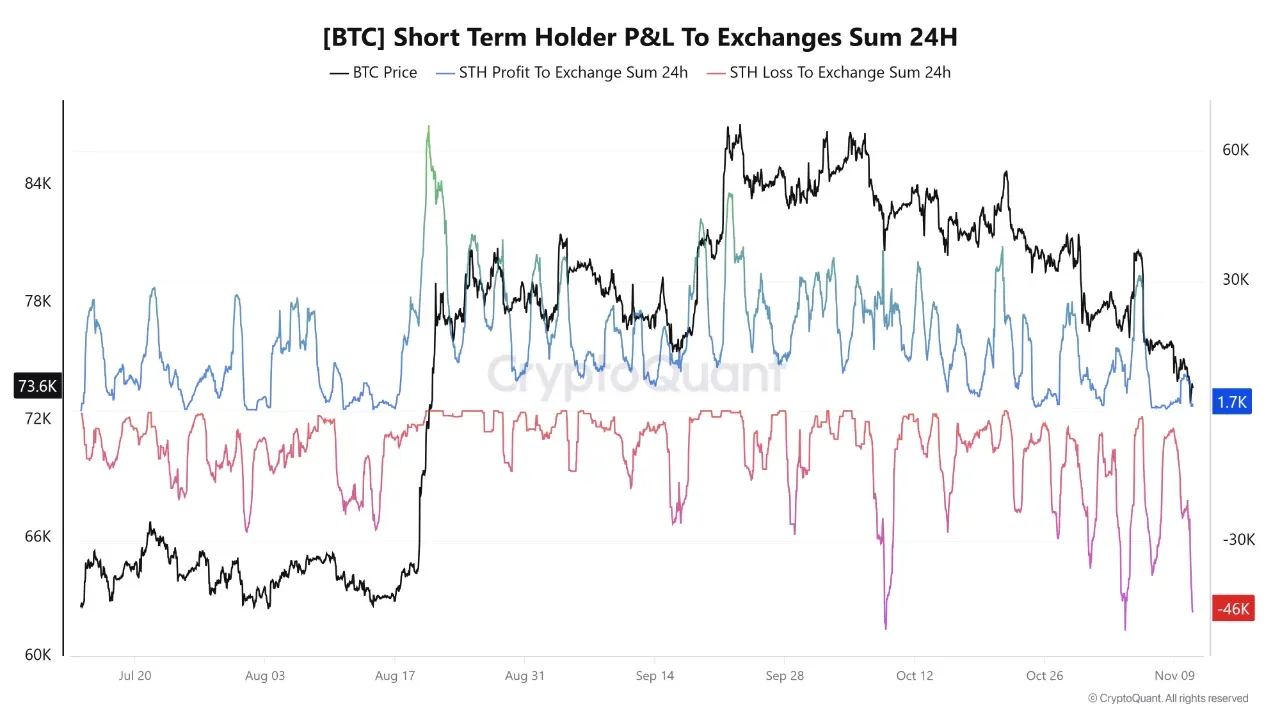
- Analyst Amr Taha separately recorded 46,060 BTC in loss-making deposits on November 10, following a 50,790 BTC spike on November 3.
- Binance received 8,114 BTC from coins last moved one day to one week earlier on November 3, according to CryptoQuant.
Bitcoin investors who bought recently are moving tens of thousands of coins to cryptocurrency exchanges at a loss, adding to concerns about selling pressure as the cryptocurrency falls toward the low-$70,000 range.
CryptoQuant’s latest short-term holder profit-and-loss chart shows roughly 47,300 BTC transferred to exchanges below their acquisition price over 24 hours, compared with only about 1,100 BTC arriving at a profit.
Combined inflows stood near 48,500 BTC, or around $3.6 billion at Bitcoin’s current price of approximately $74,000.
The research company's chart below shows transfers, not completed sales. Sending Bitcoin to an exchange can be the first step toward selling, but some deposits are made for trading for other tokens, collateral, or other services. The data also does not establish exactly how much of the transferred Bitcoin was subsequently sold.
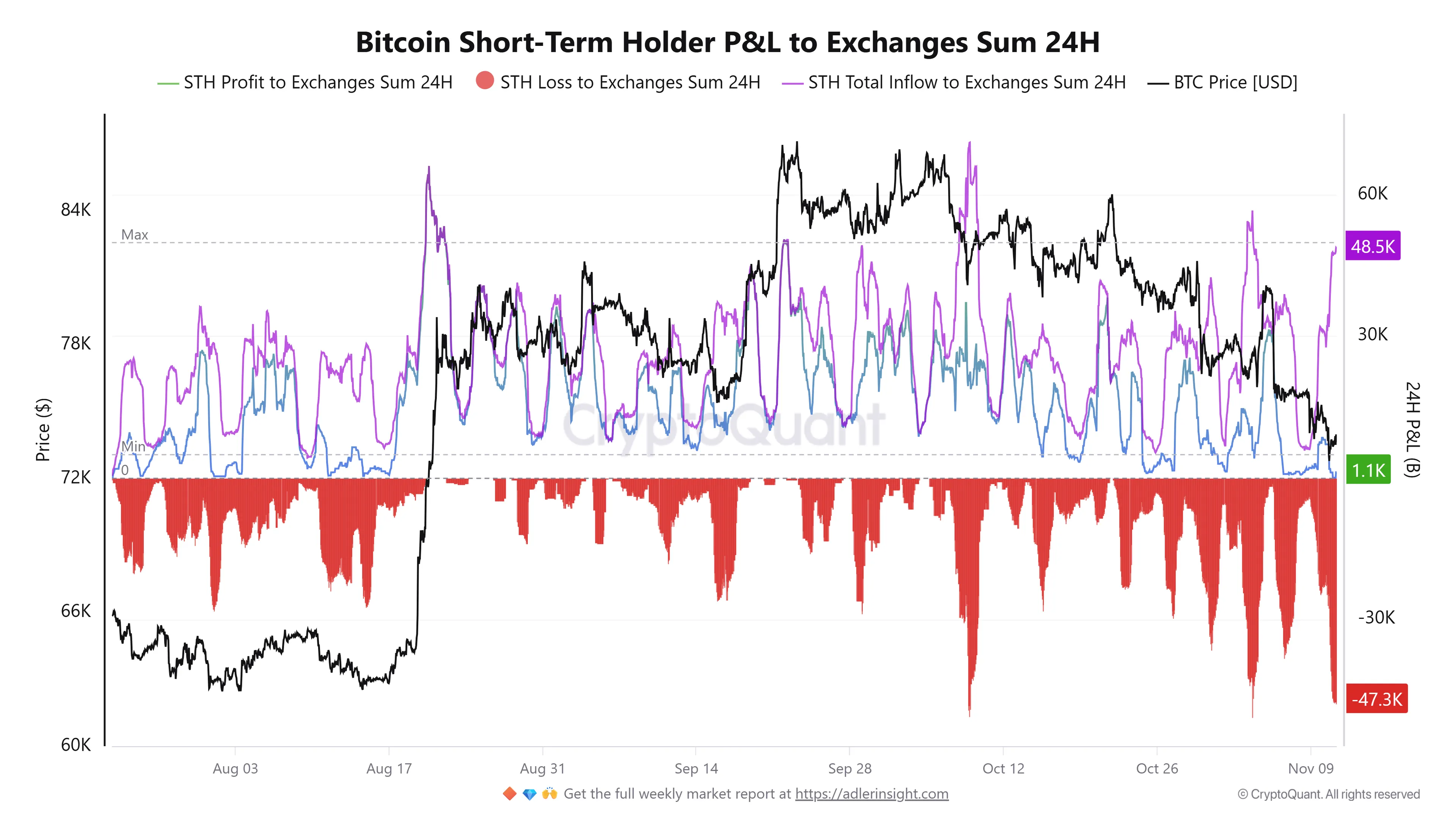
The distinction is important because the chart measures the behavior of short-term holders, a group that CryptoQuant generally defines as investors holding Bitcoin for less than 155 days.
These are often the buyers most exposed to a sudden price reversal, particularly when their holdings are worth less than they paid.
New buyers are moving coins underwater
In a November 11 CryptoQuant analysis, contributor Amr Taha identified two large waves of underwater exchange deposits over the previous week: 50,790 BTC on November 3 and 46,060 BTC on November 10.
“On November 10, profitable transfers stood near 1,700 BTC, meaning approximately 27 BTC arrived at a loss for every 1 BTC transferred at a profit,” Taha wrote.

 →
That is an unusually one-sided flow. Investors moving coins into exchanges are overwhelmingly doing so at prices below those at which they acquired them, rather than cashing in gains from the earlier rally.
A similar pattern has occurred over several months, with recurring spikes in loss-making exchange transfers as Bitcoin’s price swung higher and lower. The latest red spike appears near the deepest readings visible since July.
Why Binance is seeing activity from recent coins
A separate CryptoQuant chart breaks down deposits to Binance by the time since each Bitcoin last moved on-chain. It shows 3,290 BTC arriving from coins last moved one day to one week earlier on November 1, followed by a much larger 8,114 BTC from the same category on November 3.
On November 9, the platform also received 1,925 BTC from coins last moved one to three months earlier, according to Taha’s analysis. Those figures help identify which age groups are active, but they do not necessarily reveal when the owners originally purchased their Bitcoin.
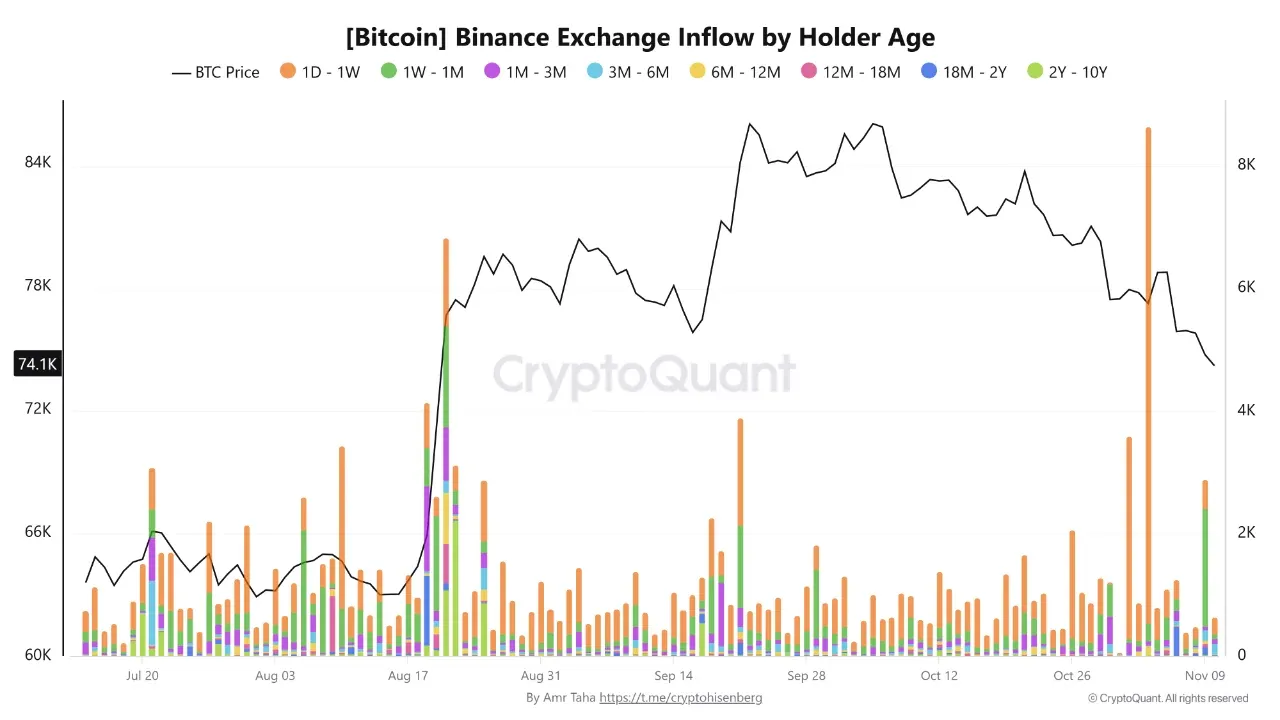
The Binance chart measures one exchange and groups coins by their last on-chain movement. The profit-and-loss charts track short-term holders sending coins to exchanges more broadly.
The timing matters because Bitcoin has been sliding from its late-September highs above $85,000 into the $73,000-to-$74,000 area visible at the end of the screenshots. A newer buyer who paid $80,000 would be sitting on a paper loss of roughly 7.5% with Bitcoin at $74,000; selling at that price would lock it in.
The recent weakness is not limited to short-term holders. Glassnode identified about 4 million BTC held by longer-term investors that had been acquired between $85,000 and $118,000, potentially leaving another pocket of underwater supply above current prices.