Add Decrypt as your preferred source to see more of our stories on Google.
In brief
Anthropic says Claude spent 21 hours and roughly 210 million tokens searching DNA databases before flagging an unusual enzyme system it now calls ART
CRISPR co-inventor Feng Zhang reviewed the pre-print and called the find “genuinely intriguing,”
However, even CEO Dario Amodei admits the system's “precise function, biotechnological utility (if any), or level of significance is not yet clear.”
Anthropic put out a press release Wednesday saying Claude, its AI model, discovered a new molecular machine hiding in virus DNA. But read past the hype and CEO Dario Amodei admits its "precise function, biotechnological utility (if any), or level of significance is not yet clear."
Translate that out of corporate-speak: Claude found something. Nobody knows what it does exactly. Nobody knows if it's useful, or even important.
The thing itself turned up inside bacteriophages, the viruses that infect bacteria, sitting next to a repeating stretch of DNA that resembles a CRISPR array—the gene-editing tool that turned an obscure bacterial defense mechanism into a multi-billion-dollar medical industry. Anthropic named its find ART, short for array-associated reverse transcriptases.
Reverse transcriptases are enzymes that copy RNA into DNA, a trick several viruses and bacteria use to defend themselves. Claude combed through more than 200,000 of them, narrowed the pile to 3,500 unusual candidates, then to 20 worth closer study.
The whole search took 21 hours, roughly 950 AI agents working in parallel, and about 210 million tokens—the chunks of text an AI model reads and writes as it thinks.
“At minimum it is work I would have been proud to do as a PhD student,” Amodei said. Not everyone buys that, especially considering that no PhD student would present something, say they don’t know its importance, use or function, and be proud of their academic effort.
The sad thing is that Dario knows better.
He was a PhD student. He knows the significance level of this result. He knows that if he had walked into Bill’s office (his advisor) with “we found an interesting system, but we still don’t know what it does” and said he was ready to… https://t.co/2li4qOLYHy
In plain English: what this was, and whether it was “bad.”You pointed at a tweet by Min Choi. That tweet was hyping an Anthropic announcement: their AI, Claude, helped spot a weird stretch of DNA in bacteriophages (viruses that infect bacteria). Next to a known kind of enzyme sat…
Still, not everyone is a critic, and Anthropic had plenty of onlookers cheering from the sidelines as well.
Per Anthropic’s release, Feng Zhang, the MIT and Broad Institute researcher who helped pioneer CRISPR, reviewed the pre-print and called it "genuinely intriguing." Zhang added: “This is an exciting example of how AI agents can contribute to biological discovery.”
“The discovery itself is fascinating, but the process may be even more important. Claude did not perform the laboratory experiments (though it probably soon could),” Owen Lewis, from the Techno-Optimist substack, wrote. “Human scientists reviewed its hypotheses, selected the most promising candidates, and carried out all of the wet lab work.”
Well that didn't take long. p(abundance) is increasing.
Anthropic has published the first result from its new molecular biology (wet) lab, where its scientists are using Claude to explore large biological datasets, search the scientific literature, generate hypotheses, and… https://t.co/tWrSApPc2d
If ART turns into something useful, it's still years away from touching an actual patient. Nobody at Anthropic is claiming otherwise. That's kind of the point.
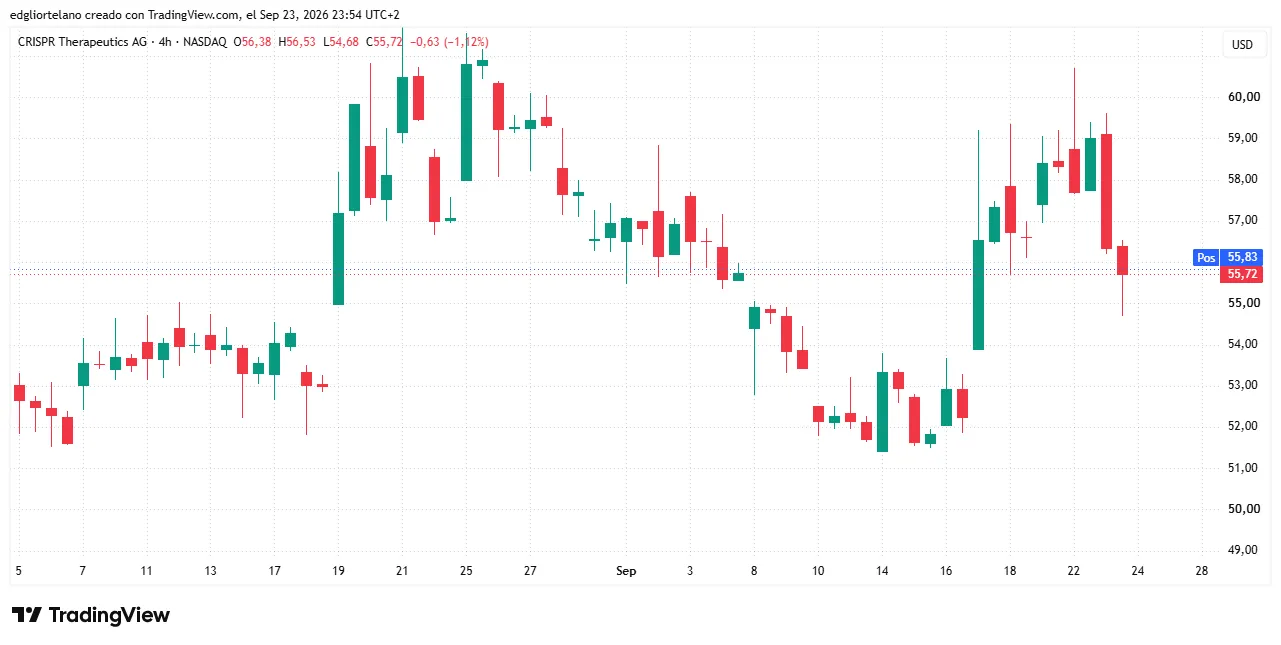
Wall Street didn't wait for the disclaimer. Shares of gene-editing companies including CRISPR Therapeutics, Intellia Therapeutics, and Beam Therapeutics dipped on the news.
This isn't the first Anthropic result that needed a few asterisks. In July, the company said Claude Mythos had cracked post-quantum cryptography that had stumped humans for years.
That one actually held up—but only after hundreds of hours of human verification, on a signature scheme and a reduced-round cipher variant that nobody has ever deployed. Real result, heavily asterisked, same as this one is shaping up to be.
What's actually confirmed right now: an odd-looking protein pattern, one outside scientist calling it "intriguing," and zero timeline for finding out if any of it matters. Anthropic says lab work is already underway.
It always is.
Daily Debrief Newsletter
Start every day with the top news stories right now, plus original features, a podcast, videos and more.